USPS proposes stamp price hike as financial pressure builds

Add Axios as your preferred source to
see more of our stories on Google.
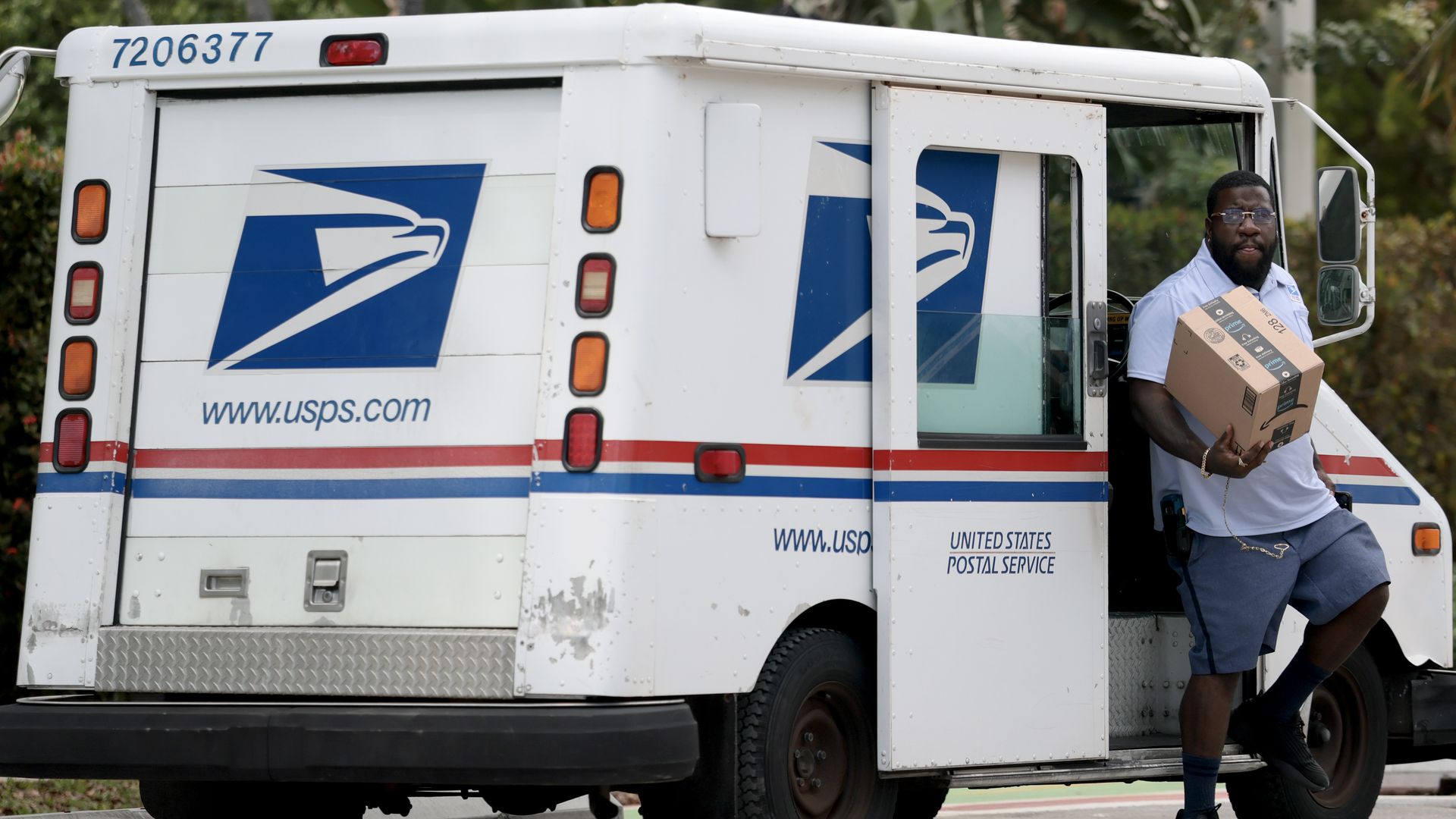
USPS is proposing a stamp price increase to 82 cents starting in July. Photo: Joe Raedle/Getty Images
The U.S. Postal Service said Thursday that it plans to raise stamp prices this summer as it looks to shore up finances amid mounting cost pressures.
Why it matters: The proposed increase — alongside a series of cost-cutting and pricing moves — shows USPS is pulling multiple levers to stabilize its finances.
Driving the news: USPS said in a news release Thursday that it had filed a notice with regulators to raise the price of a First-Class Mail Forever stamp by 4 cents, to 82 cents, starting July 12.
- Overall mailing service prices would rise about 4.8% if approved.
- The agency said the changes are needed as it faces a "severe financial crisis," adding it is using "all available tools" to manage rising operating costs.
The big picture: USPS has warned it could run out of cash as early as 2027 — and Postmaster General David Steiner told lawmakers in mid-March that the agency could run out of money in less than 12 months without congressional action.
- Mail delivery itself could be at risk if finances deteriorate, officials have said.
State of play: USPS is making a series of moves to manage its growing cash crunch.
- The agency will temporarily suspend employer contributions to its main retirement program starting April 10 after regulators approved a waiver to preserve cash.
- It will also add an 8% surcharge on packages starting April 26 after regulators approved the temporary fee this week.
- USPS has signaled plans to raise stamp prices to as high as 90-95 cents, up from 78 cents today.
Yes, but: Some mailing industry groups say the crisis is self-inflicted — and warn USPS is "raising prices while reducing service."
- Keep US Posted, a nonprofit advocacy group, argues that USPS has lost more than $25 billion since 2021 despite federal aid and repeated price increases — and says the agency has a "cost control problem," not a revenue one.
- The group is urging Congress to attach stricter oversight, pricing limits and service requirements to any future financial relief.
Editor's note: This story has been updated with additional details.
More from Axios:
