How the National Guard transforms schools into virtual disaster zones
A message from: Army National Guard
The Army National Guard plays a critical role when communities face natural disasters and emergencies. Now, it's helping high school students understand what that work looks like up close.
How it's done: Disasterville, an experience from the Army National Guard, shows students how Soldiers respond to natural disasters and emergencies through hands-on simulations.
The program transforms school gyms into mission-oriented disaster zones, using mixed-reality technology to simulate wildfire response, flood rescue and earthquake relief.
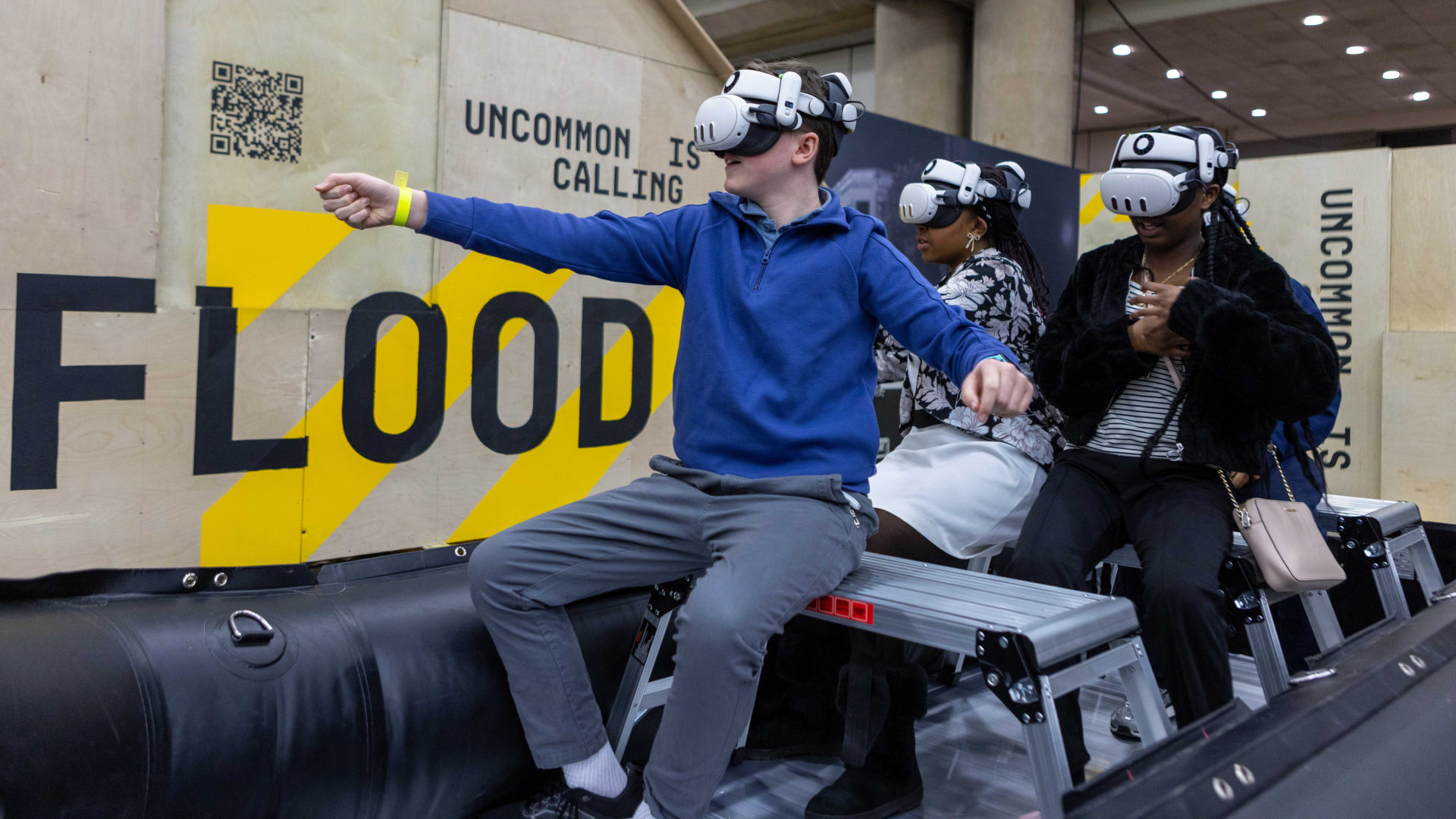
- Students wear virtual reality (VR) headsets and move through physical sets mapped with augmented reality (AR) and VR graphics.
- They work alongside classmates in multiplayer missions, using communication and problem-solving to respond like Guard Soldiers.
The experience also uses hand tracking, so students can interact with in-game tools without traditional controllers.
- They may use tools like oars or hoses as the virtual environment around them becomes a damaged neighborhood filled with hazards and people in need.
Students can go through three 10-minute immersive experiences:
1️⃣ In the wildfire mission, students work together to push back flames threatening a home in Disaster Canyon. They put out small fires, combine forces against larger flare-ups, rescue animals and avoid falling trees.
2️⃣ In the flood mission, students board a real Zodiac boat after a major hurricane and use headlamps to find survivors trapped in rising water.
3️⃣ In the earthquake mission, students respond after a train carrying passengers and hazardous chemicals derails. They must rescue survivors, clear debris and work quickly as conditions become more dangerous.
Following a successful spring tour that reached more than 2,000 students, Disasterville will travel to more high schools this fall, with stops planned in Memphis; Chicago; Hagerstown, Maryland; Philadelphia; Long Island; Richmond and Atlanta.
Why it's important: With natural disasters more common than ever, Disasterville gives students a closer look at what it takes to respond when disaster strikes and the important role Army National Guard Soldiers play in the process.
What you need to know: When disaster strikes, Army National Guard Soldiers can be called on to protect lives, support emergency response and help communities recover, often in the same places they call home.
- When activated, they bring training, teamwork and field-specific expertise to complex emergency response missions.
- Their disaster-response missions can include search and rescue, transportation, engineering, aviation support and emergency medical response.
An example: Capt. Carter Phung, a Logistics Officer with the South Carolina Army National Guard, has extensive hands-on experience responding to some of South Carolina's most significant natural disasters.
- While attending The Citadel in Charleston, South Carolina, Phung supported response efforts during the state's historic "1,000-Year Flood" in 2015, helping direct traffic evacuations, conduct high-water rescues and clean up affected communities.
- Plus: During Hurricane Florence in 2018, Phung helped coordinate a 50-vehicle, 120-person convoy in his hometown of Conway, South Carolina, to help manage the equipment and barriers used to build the "Great Wall of Conway," a temporary wall made of sandbags to hold back rising floodwater and keep critical roadways open.
"The community, the state and the nation are relying on you to go do your job no matter what it is," says Phung. "You have to be very resilient and flexible because with every different disaster, you have a different role or response."
The impact: Phung's disaster response experience taught him resilience, adaptability and confident leadership under pressure — and showed him how the National Guard can bring together local citizens and communities when disaster strikes.
- "Especially with Hurricane Florence being in my hometown, I got to help some of the people I knew," says Phung. "Being able to effect change and being able to help my community members was a great feeling, just knowing that I was a part of something bigger."
For Guard Soldiers, that commitment to service exists alongside their civilian lives.
- Soldiers serve at least one weekend a month and two weeks a year, giving them flexibility to pursue civilian careers, education and other goals while serving part-time.
- They can also receive benefits of Army service, including medical benefits, tuition reimbursement, career training and home-buying assistance.
Next steps: Learn more about the Army National Guard.